Sunday, August 11, 2013

The Art of the Short Story and the Woman on the Porch

I've been writing short stories from the beginning of my writing career before it was a career. I loved reading short stories and loved writing them. Over the intervening decades I've written hundreds of short stories. Many of them were published, more than 150. I still write stories and sometimes I offer them to anthologies or magazines and sometimes I publish them myself via Kindle. This year was a banner year for me and the short story. Ideas swarmed me and I couldn't turn away from any of them. I've written fifteen new short stories since January 2013 (8 months) and the word count for all those stories runs around 60,000. 

I'm known as a novelist. One of my novels was noticed by the Edgar Award committee and it got nominated for Best Novel. Another book was nominated for the Stoker Award for Most Superior Novel. I'm not saying I don't like writing novels, because I do, and I just completed a new novel this year titled THE GREY MATTER. But the short story is where I live. 

Some writers don't bother with the short story. I remember early in my writing I met a creative writing teacher in Tampa, Florida. I'd seen an article about her in the Tampa newspaper and I was so desperate to know if my writing was any good at all I found her phone number and called her on the phone. Her name was Barbara Deane and although she didn't know me, she offered to come by my house one day and read a couple of my stories. (I hadn't yet written a novel length work.)

She sat on my glassed in porch while I tried to keep my two little girls quiet as she read. I'd supplied her with a glass of iced tea and a half dozen of my typed stories. I sat gnawing my fingernails. If she told me they were shit, I was a goner. A professor in San Diego was roped by my husband into reading a couple of my stories. He met with me and said I wrote like Flannery O'Connor and that I was talented. I was so young (22) I hadn't read Flannery. I made short work of that, going to the bookstore and picking up a copy of some of her stories. I sat at home reading them thinking no way I wrote like her. She was indeed a master of the short story and I was stunned by the work. Still, the professor's over-praise kept me writing. And now someone sat on my porch and was going to really tell me if I was any damn good or should I try to do something else with my life. It was a momentous event. I was scared to death.

My girls tired and fell asleep for a nap. Still the lady sat on my porch reading. I could see her when I peeked around the door frame and she seemed quite immersed. My stomach was in knots and if she didn't finish soon I was going to rush out on the porch and ask her, "Listen, what do you think?!"

In time she called me to her. I sat down, wringing my hands. She said this: "Billie Sue, you're a good writer, a very good writer and I love these stories. But you can't make a living from writing stories. You're talented and you need to put your effort into writing novels. You have a career ahead of you, it's time to get busy."

She left me there with my stained manuscript pages and my heart bursting with joy. (Over the years Barbara and I kept up a correspondence. She was one of my best friends and mentors.) This was the second authority figure who knew good fiction who had told me I had talent and maybe now I'd believe in it and keep writing. But this person told me I'd never make a living at story writing and I needed to write a novel.

I did. It took three years because I was new at it and I had toddlers underfoot and we moved a lot. Also, I just had no idea what I was doing. It took a while, too, because every now and then I couldn't help myself and I stopped the novel to write out a short story and mail it off to a magazine. (I didn't sell a story, though some came close, until the month in 1983 when I sold my first novel. After that I sold a great many stories--and novels, too.)

Stories kept me alive as a writer. I had too many ideas punching me in the skull to stick only and always with novel writing. If we can go by the award nominations, it appears I write good enough novels. I like them. They're hard for me, but I like them. The story writing, however, buoys me and thrills me and makes me happy as a child on Christmas morning. I just love to write them and of course I still love to read them. A well-written short story is a work of art. It has to have it all and in a short span of words. Characterization, setting, description, emotion, plot, and for me, an excellent ending that you don't always see coming, but that is satisfying.

This year, what I'm calling my banner year, I was writing short stories in between the writing of my novel (as I've always done) and they simply poured out. All sorts of stories, though they're all of a dark nature despite whatever genre they fall into because...well, that's just the kind of imagination I have. I wrote about a man who cleans cadaver skulls for a living. I wrote about sisters who have a problem with ghosts in the house. I wrote about a man shown worlds he never knew existed and how they were all failing--all the "systems" were failing. Stories about creatures, stories about aliens, worn out detectives, a woman with the ability to create fire, a cursed chair, an enhanced man with a dubious Facebook friend, and an abducted woman or two. I can write a story from a word, a scene, a book cover, a word, or a documentary from television. I write stories from just one sentence or a picture of a person I have in my head. 

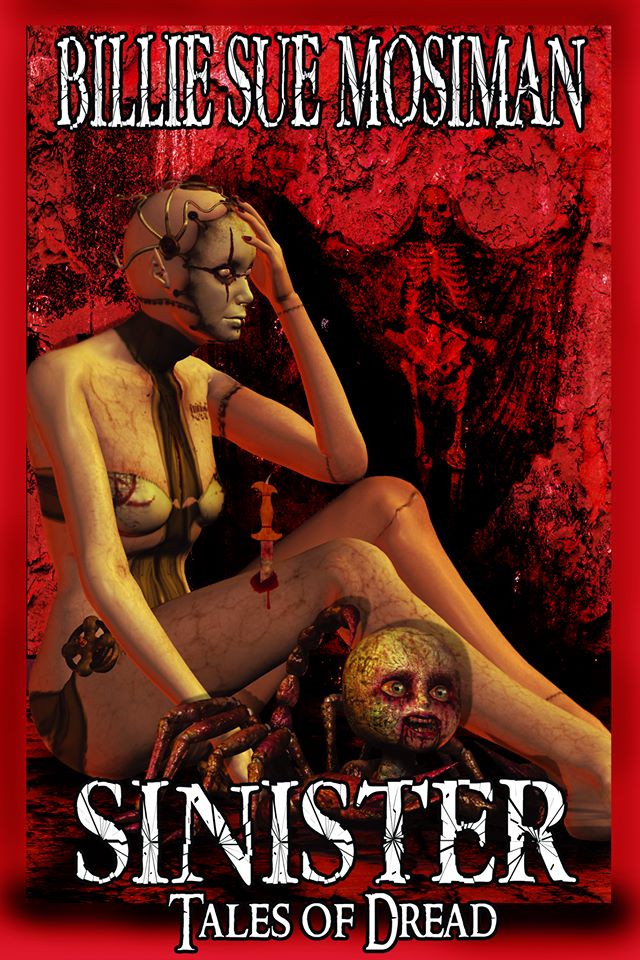
Stories might not make a writer a living (that was a true thing the lady told me), but stories make me happy to be a writer. I'm collecting the stories this year together in a paperback and digital ebook and calling it SINISTER-Tales of Dread. I don't know if readers will like them as much as I do, but one of them has been selling really well for months now on its own and another is getting notice from readers and was picked up for a reprint in a good anthology. I'm the same now as I was when I was the twenty-two year old writing stories. I write them because I can't help it. They call to me to be written and I never refuse. What happens after that simply isn't up to me anymore. You throw the work out into the world and hope the world will notice it and enjoy reading it as much as you enjoyed writing it and that's all you are called upon to do--it's all you can do.

Some writers shouldn't even attempt to write short stories as they haven't the knack for them. Some should only write them and never attempt the novel form. Some write both and do well with them. I have no idea how many more stories I'll write throughout the rest of 2013 or how many I'll write next year, but I know this: I'll keep writing them because it's one of the forms of fiction I love the most.

Your one question may be what if the lady on my porch turned to me and said my stories were shit? I would have crumpled and cried like a big baby. But knowing what I know now about myself, I wouldn't have stopped writing them. No matter what she'd said, it wasn't possible for me to stop writing stories. 

If this blog post is a poem to the short story I know it's a long one. A long poem to the beautiful and fulfilling nature of the short story. May she ever reign! May the readers remain forever and the writers write them forever and the stories, like rain for the earth, nourish us the way they're meant to do. 

Please keep an eye open in the near future for SINISTER-Tales of Dread. I have stories to tell you.
Wednesday, August 7, 2013

Cabin in the Woods

I watched CABIN IN THE WOODS for the second time recently on a satellite channel on TV. I still found it interesting in a train-wreck sort of way. Once the film was over I was half asleep on the sofa and too tired to reach for the remote control to change the channel. So the credits began to roll. And roll and roll and roll. Hundreds of people were listed involved in the making of this movie. Considering this wasn't a Brad Pitt or Tom Cruise film I was surprised to see how much money was put into the movie and how many people it took to make it. Hundreds, I tell you. I mean they had about twenty drivers for goodness sakes. The credits kept rolling and, mesmerized, I kept watching it and reading all the sorts of people it took to make the movie. I know it had a lot of special effects and those kinds of films take a big crew, but this was astronomical. If you don't believe me, watch the end credits next time you see it. 

Then I began thinking along another line. Do you know who put all those people to work? A writer. Do you know who puts all the people in the movie and television industry to work? Writers.

I started thinking how many people it took for me to write a book and see it published. It took me, of course, to write it. Then a publishing house used an artist, an editor, a proofreader, a sales crew, a copy editor for the cover, and probably a few more people I know I'm forgetting. But let's say it involved less than twenty people total. A book, even from a major publishing house, takes so few people to make it a reality. While a movie takes..sometimes hundreds. 

If you think about digital ebooks, you're looking at considerably fewer people. Maybe five and that's including the author. (Artist if you use one, editor, beta reader, proofreader.)

In all of the entertainments, every single one of them, who is the most important? You might say in film it's the director or the actors. I'd say you're wrong. Sure they're important, they're of the utmost importance, but the MOST important is the writer. I know Hollywood doesn't think this way, but it's the bald truth. Who is the most important in television dramas and comedies? The writer. Who is the most important in the making of a book? The writer.

What I'm telling you here you probably already know, but might not have thought about it much. Writers rule the entertainment world. I know they aren't given the credit they deserve, oh absolutely not, especially in Hollywood. And the movie/TV industry would never admit the writer is that important--they'd have to treat them better and pay them better. But the truth is they have nothing without the creative genius of the writer behind it all. Often the writer is the silent partner. The novelist's book is bought by Hollywood and they hire a scriptwriter (also a writer, of course!) to do the screenplay. The novelist is paid off and largely ignored from that point forward. But I'm here to remind you and to remind the world, you would not have the wonderful series of the TV drama of BREAKING BAD without the writer. You would not have DEXTER without the writer. You would not have short stories, novels, magazine articles, great blogs, comics, movies, television, or even video games without the writers. Think about that the next time you see a good movie or TV series or read a good news article or a good book. Writers are not given the credit they deserve, they aren't always upheld and noted and praised, but without them your entertainment would go away; it would disappear and leave you without any visual, cultural, or print entertainment at all.

The end credits of CABIN IN THE WOODS rolled past and I sat immersed in the thoughts of all those people doing all those jobs to make one movie less than two hours long. Then I snapped to it: It all started with the idea. From a writer. And the dialogue was written by a writer. The plot. The story. None of those hundreds of people would have been working just then without the writer. 

It was a pretty good horror flick. I got a kick out of it. 

I received more of a kick from realizing (remembering) how the world of entertainment spins on the axis of the thousands of talented writers.  Without them and their creative work alone at a desk, working from inside their heads, none of us would have any of these entertainments we take for granted and give all the glory to others for making it for us. I salute my profession. I salute the writer. I am sad I have to remind people how important the writer's job is. But someone had to do it.

Rock on, world. Next time tip your hat to the real artist behind the movie-documentary-TV episode-novel-story-news account-blog-article-advertisment-textbook-presidential speech you enjoyed. You know who gave it to you.

Wednesday, January 2, 2013

Who is and who is Not an Editor in today's new Digital Landscape?

I talked about this on my Facebook page and I thought I'd expand it a little here on my blog.

If you have never been published by a major publisher, then it's possible you've never come into contact with a professional editor before. If you are new to the publishing world and you've gotten into it through self-publishing e-books or going with small presses, then your experience with editors might be slim.

I've had editors who worked with my published novels and stories, several of them, and all but one was excellent. An editor does not teach you to write. An editor does not take your story or book and rewrite it. An editor makes you better than you are, makes your work clearer, cleaner, and more professional. An editor will find problems with continuity, pace, and overall storytelling. They do more than that and it's a difficult, very skilled job, not for an amateur with a BA in English who likes to read and thinks he might be a good editor. A line editor, which is a different kind of editor, will fix your mistakes--you know, grammar, verb tense, punctuation, capitalization, spelling, and so forth and so on. You need an editor. Everyone needs an editor; it doesn't matter if you've published two million words professionally or one self-published e-book. 

I admire editors. I like them. I might even say I adore them and I would not be lying.

However, due to this new digital era a very large problem has ensued. People are writing and publishing books that were rejected by major publishers. (Nothing wrong with that.) People are writing the first book of their lives and publishing it for Kindle and Nook. Nothing wrong with that either. People are being taken by small publishers and getting published that way. All of these new published works need one thing for sure and that's an editor. 

There are really three kinds of professional people who deal with books at large publishing houses. The editor, and I've explained what they do for the writer. The line editor, and I've stated what their job is. Then there's the proofreader, who catches the mistakes and glitches and typos. (There's also a fact-checker, sometimes done by one or the other of the former editors or hired for that job only.)

Today when you're looking for an editor, you may not get all those skills rolled up into one person--chances are you won't find anyone nearly that skilled and experienced. My advice on that is to become really good at line editing, proofing, and fact-checking yourself. If you don't, who will? But you still need an editor, someone to tell you the story is a pile of steaming crap and ask you to do it again or give it up. Someone to tell you chapter four sucks and you better delete it and do something about stitching the book back together. Someone who notices your style needs one hell of a lot of polishing, maybe even some learning, and asks you to rewrite the entire novel with the given advice in mind. Someone who knows when your pace slackens or is too quick. Someone who knows about characterization and can tell you if you've written cardboard characters or your characters aren't coming to life. Someone who understands good sentence structure, knows how stories should open and especially how stories should end. Someone who will not hold your hand, but demand you are the best storyteller you can possibly be. After a lifetime of writing you can sometimes get to a point where you don't need as much editing as you once did. Only you and your readers can determine when that time comes. Most of your life, you need an editor. I'm not lying to you.

Now this might upset a few people, but there are editors and there are editors. Because of the influx of new people who want to write, who have written and then published digitally, the smart ones get an "editor" to go over their work. However, be aware that anyone can call himself an "editor" the same as anyone today can call himself a "writer." Just as in writing, some can't write and shouldn't even be trying, and in editing you are going to run into people who really are not editors. They even may have a degree in English or Literature or whatever, and still not be editors or even good beta readers or proofreaders. They may be writers themselves--which does not mean they can edit. Do a little research before going with small presses where the editors are...um...not as professional as they might be. Or "editors" who offer to edit your work without a clue about what they're doing. Editing, like writing, takes a certain skill and not everyone has it, even those with degrees that make you think they might be good at editing. Even at NY publishers there are good and there are bad editors. Mostly good, I admit, but now and then some are just plain bad. One of the best things you can do as a writer is to train yourself, to the best of your ability, to edit. Read books on it, if you have to. Try editing someone's work, see how it goes. But most of all, just don't trust that because someone says he's an editor, that he is. This is a new byproduct business that's popped up due to digital books proliferating and people truly needing an editor. Don't trust every publicist, every editor, every proofreader, every agent, or every publisher you run into on the internet. It's just as rife with crap out there as it can possibly be. 

Don't say I didn't warn you. You're on your own in this brand new publishing era. Do the best you can to maneuver through it with the proper trepidation or else you won't get what you're paying for, you'll end up embarrassed by the work you publish or see published, and all along you could have done better. Do better.

Thursday, December 27, 2012

EPIC KINDLE GIVEAWAY AND SALE!

My novel BANISHED is one of 12 that are on sale in the Epic Kindle Giveaway Sale today and tomorrow. We're giving away a Kindle Fire and Amazon money vouchers.(Check on the right side of this page to enter.) I thought I'd talk a little about what made me write a novel about a couple of fallen angels in BANISHED when, except for my Vampire Nation Chronicles, I have written suspense crime thrillers. --- It came from a dream related to me by my grown daughter. We get our ideas from everywhere and this idea really snagged my attention. The vivid dream was about a little girl who was not really human, couldn't be, since she had "powers" and seemed ancient, not young, and she was evil as she could possibly be. I even used the entire dream in what will be the next book, the sequel, to BANISHED. The girl in the dream was a voodoo queen in New Orleans. She was not a fallen angel--that came from my imagination. She wore a little white dress, white frilly socks, and black patent leather Mary Jane shoes. She had long black hair and a red ribbon tied in it. She was a threatening little person, horridly beautiful, the beauty of a perfect child who held within her a great propensity for evil and destruction to those who happened into her sphere of attention. She could read minds and manipulate people. The contrast between her looks and presence and the inner demon that resided inside her fascinated me. (Haven't we all met people who were beautiful, but frightening in some way?) How she became a fallen angel, I can't remember exactly, she just did, and not just any angel, but the Queen of all the fallen. What did she want in her centuries' walk on this earth? What all who are evil want--she wanted domination over everything and everyone, she wanted to rule, she wanted to be the Queen of the human world just as she was queen of the underworld fallen and cast-out angels. That is where the book BANISHED came from and now it's spawning a sequel and perhaps will inspire me long enough for a trilogy. If you want to see what I did with my bad little angel, get BANISHED today for just $.99. I think it's worth a lot more and that's a bargain, but grab your copy, enter the Kindle Fire Giveaway, and you decide about the tiny angel who has come down from the darkness to spread her wrath and fury on humankind...


12 novels on sale for three days only for just $.99. Enter to win on this blog in the raffle to the right of this page. Pick the great novel of your choice and enjoy a holiday deal for only $.99. I wish you great luck and hope you win the Kindle Fire!

Friday, December 21, 2012

Repost of a Soltice List: Books and Stories Not to be Missed from 2012

Solstice List: Books and Short Stories Not to be Missed 2012

by Malina Roos on Thursday, December 20, 2012 at 10:01pm ·

I have read a lot of books in the last two years. Well, I have always read a lot of books but in the past eighteen months I started tracking just how many I read. I am up to 623. There were a lot of good books and a few great ones. Fortunately only about a dozen or so were bad, really, really bad. This year I also joined the Horror Writers Association and with that honour I nominated a few great stories. Don't know if they made it all the way through, but I guess we will find out in a few months. The only down side to this is books can only be nominated in the year they were published. That left out a lot of great books. Books that people read a year or more after publication, or books that were written by authors unsure of the HWA and were not members. So I decided to publish my own list of great reads.

I also write book reviews for my own page Only Five Star Book Reviews as well as for Hellnotes. Some of the books on the list you will find have been reviewed on both sites, but others have not. Not enough time in the day right now, to do all I want to do. But I will get to them.

All of these stories touched me in some way. Either the way the author used prose, the depth of characters, or the story. I only had a couple of rules; the story must be edited, no typos, gramamtical, or punctual errors. I don't care about style. If an author chooses to write about a character with a speech impediment, or accent, so be it. But to publish something that has numerous errors makes my teeth itch. If I get to chapter two and already have enough highlighted areas on the pages to make a black and white page look like it is printed on yellow paper, I toss it. Did that to about a dozen novels. Irritated the heck out of me. If you as an author, spend time and energy creating a story, spend some time or money or both, editing it. Please.

Second rule was it had to make me think or engage me in a way to let me get lost in it. That brings me back to rule number one.......if I am reading a story, I want to become lost. I want to wander down the trail of well-spun prose and sharp descriptives and I don't want to trip over poor editing and fall on my face.

That was it. Now the problem......I wanted a Top Ten List. I have 40......so, since this is my list I took the liberty of separating the stories and books into categories, cause I can. I have the Solstice Top Eleven (?)  Short Stories and Long Fiction, Solstice Top Novels (20), and Solstice Anthologies.

On this list you will find a myriad of authors, writing styles and publishing dates. You will also find a variation on theme, voice, tone and style. One thing they all have in comon though is brilliant writing, great storytelling and a way to stick in your mind. Keep in mind these tomes have not all been published in 2012. These are the stories I have read this year that I believe are top notch.

Best Short Stories and Longer Fiction
  1. Flesh & Blood Jerry McKinney
  2. Tears of Love Jerry McKinney
  3. Prison Planet Billie Sue Mosiman
  4. Mourning Mansion Billie Sue Mosiman
  5. The Girl Bryan Hall
  6. Pisswidget Franklin E Wales
  7. Mama Said Lee Allen Howard
  8. Unleashed: Tail One Lori R Lopez
  9. Feed Jerry McKinney
  10. Frankenstein:Return from the Wasteland Billie Sue Mosiman
  11. Labour Pains Lee Allen Howard

Best Anthologies of 2012
  1. Zippered Flesh: Tales of Body Enhancements Gone Bad Weldon Burge*
  2. Dark Blessings John Paul Allen
  3. Dead in the Truck Craig Saunders
  4. Midnight Hour Neil Davies
  5. World Collider Richard Salter
  6. Night Sound Jerry McKinney

Best Novels 
  1. Scars on the Face of God Chris Bauer
  2. 100 Unfortunate Days Penelope Crowe**
  3. Apparition Michaelbrent Collings**
  4. Gifted Trust John Paul Allen***
  5. Seven Point Star Craig Saunders
  6. Requiem for Dead Flies Peter Dudar
  7. Nightwhere John Everson*
  8. Selection Event Wayne Wightman
  9. Wishbone Brooklyn Hudson
  10. Shining in Crimson Robert S Wilson
  11. Don of the Living Dead Robert DeCouteau****
  12. Critique Daniel I Russel**
  13. Pressure Jeff Strand
  14. The Vampire Club Scott Nicholson****
  15. One Night Stan's Greg Sisco****
  16. Zomblog Todd Brown
  17. The Plauge Lisa Hinsley
  18. Widow Billie Sue Mosiman
  19. World Mart Leigh M Lane
  20. Anon Pete Giglio

Series
  1. Chronicles of the Vampire Hunters: Creation (Book 1) Judgement (Book 2) Extermination (Book 3) Dustin Palmer
  2. Scrolls of the Dead- Legions of the Dark, Rise of the Legend, and Hunter of the Dead  Billie Sue Mosiman

                                        *Dark  **Disturbing ***Dark and Disturbing ****Hillarious

Do yourself a favour and read these books. Read all of them. If you are a writer, read them and see what makes these great. If you are a reader, read them for entertainment and pleasure. I know I will be reading them again and again and again.........

Wednesday, November 28, 2012

Writing about ZOMBIES--in a way...ZOM ALIVE:2110

Recently I wrote a long novella about "Zoms." The title deliberately didn't call them "zombies" and in the story they aren't called that. In fact, one of the featured characters is a Zom and tells the reader he is not zombie, don't call him one.

The idea came to me when I saw yet another shambling, mindless zombie stagger across my TV screen in some movie or other. Entertainment is rife with zombies at the moment. Zombie TV series, Zombie movies, and Zombie books. Although I have read one zombie novel that I enjoyed, DEADHEADS:EVOLUTION by Franklin E. Wales, for the most part I do not read books about zombies and I don't watch TV shows or movies about them. Why? Because they make absolutely no sense to me. They're DEAD, but animated? Really? They eat human brains, why? In my reality dead is dead. Dead is not going to rise up and walk again and it certainly isn't going to eat anything, human or not. Also, how interesting is a creature that has no thoughts beyond hunger? And the survivors who flee from zombies? How interesting are people who run from dead shambling humans who can't even speak? Ooooo, so scary.

You might say well, what about vampires and werewolves and ghosts and other monsters? I can go for those on occasion. I can find a way to suspend my disbelief if the writer is a good enough storyteller. I've even written an entire trilogy of novels that was published by DAW Books about vampires and I tried to make them as believable and as human as possible.

I simply cannot contend with a creature we call a zombie that is dead, has no thought processes, and moves around only to snack on human flesh. Logic doesn't allow me to accept such a creature.

Therefore, I thought about what kind of creature I could believe in and it was a human being who has been infected by a virus let out accidentally from a laboratory. A human that was "zombie-like" in that the person no longer had control over his own mind when he felt anger and rage. A person ruled by his lizard brain, his primitive brain, the one that has no concept of empathy or control over action. That's how I began writing ZOM ALIVE: 2110. I decided it was time, in the annals of zombie literature, to bring the zombie under the rules of logic and give him back his humanity.

There are trends in literature and in national media that come along and right now it appears to be zombies. There's the Zombie Apocalypse (whatever that could be), there's zombie calendars, zombie bumper stickers, zombie T-shirts. I don't know about you, but I'm zombied to the hilt these days and hoping some other imaginative creature will come along in horror to read about finally. One that makes some sense.

I'm not saying your love of zombie fiction and film isn't your own business or that you are less than worthy for liking it. I'm just stating a fact from my own personal opinion--not trying to make the whole nation who loves zombies come raining down on my head! I understand the world today is in flux and there's a great deal of tension and worry. Anything creative that lessens that anxiety can only be good for us. It's just that zombies don't do it for me. Give me a haunting ghost, a revenge-filled revenant spirit, a skulking werewolf, a Frankenstein, a gargoyle or goblin. Give me a Hobbit. But please, don't ask me to read about the usual zombie, or ask me to watch another zombie movie, or tell me about the latest doings on The Walking Dead because, frankly, my dear, I don't give a damn.

Having said that, if you're in the mood for something different in the zombie genre, if like me you have trouble suspending your disbelief for the shambling dead, give my novella ZOM ALIVE: 2110 a little try.

Happy reading!

Monday, October 1, 2012

An Artist's Integrity or How Hard is it to be Honest?

Secrets always come out. No, you say, sometimes you can keep them hidden.

Well, probably some can remain secret, but I'll amend my generalized statement to say Secrets Most of the Time are Revealed. Why? Because people aren't stupid.

What does keeping secrets have to do with integrity? It has all to do with it. Writers are like other people and I don't want them to be like other people. In general, people lie about themselves and what they've done, at least now and then. They may only lie to family or to a few friends or co-workers, and the lie may be small, insignificant--or it may be large. It may even be in the human chromosomes to lie when the truth would do as well. I don't know about that. It just sometimes seems that way.

Writers and artists, however, are people I hold to a higher standard. Writers, especially, deal with the human condition and the human heart. If you write well, you write with honesty. Honesty in emotion and in characterization. Otherwise the fiction fails and is junk--worse than junk, it's fodder. Why then would a writer, a good writer of that sort, lower himself to lie about his life and accomplishments? To further himself, you say, and you'd be right. To appear greater than he is, you say. To create a persona that cannot be toppled.

Lately I've dealt with a few secrets artists tried to keep that have backfired on them. One was from a cover artist, MY cover artist, who had grown into being a friend. He always tried to fit my covers to my work, he was fast, and he didn't charge me much because I'd been with him so long and had praised him to high heaven to any other author I could find. Suddenly friends and other writers began to send me messages about how the artist's covers were being reused, showing up on two or more other writers' works with only minor changes. Well, I thought, that's not good, but maybe it's because they were bargain bin covers and he never really told any of us the covers were made only for us. You see we didn't get any of this in writing. We assumed because we were led to assume. Then I got messages about the artist's sordid past and charges of fraud. Well, I thought, that's worse, but that was the past, maybe he's different now. THEN I discovered my cover artist had taken the copyrighted work of other artists and used it without permission. I had to speak out. I felt responsible for encouraging people to use this cover artist and now I felt responsible to tell them he was not as he seemed and their covers, some of which they might have paid top dollar for, might be reused for someone else or the art might not be original. It was a most difficult thing to speak the truth about someone I thought of as a friend. But this friend had not been upfront with me or anyone else and this friend's "secrets" were found out.

Integrity. Had there been honesty and integrity at play, the artist wouldn't have reused the covers without stating in the beginning he was going to do so. Letting the author assume the work was original was in itself a lie of omission, but still a lie. Integrity would not allow an artist to use another artist's work as his own.

Now we come to writers and what all this has to do with them. On the main, writers are the observant, intelligent, and sensitive creatures I expect them to be. Once in a while you discover a few of them are jealous-hearted, revengeful, and even fraudulent, but I think this is rare. Recently I was reading a short story by a fellow writer I've known since the 1980s. I've been around a long time so I've met my fair share of authors young and old. Anyway, I was reading the story, one I'd missed in the past, and at the end was the author's summarized biography. It was an obvious fiction. At least to me, who knew him and his past and his accomplishments, it was fiction. (I am using the generic pronoun "he/his" but that doesn't mean this person was male.) Half of it wasn't true and I knew it. I sat there dumbfounded. Had this friend built his entire reputation on a mountain of lies? How long had these lies been perpetuated? And what was the reason for it? Surely the reason was to empower the author and to help him rise up the ranks to become a grand writer, one others looked up to, one others admired and envied. It certainly didn't hurt to be able to say one had won every single writing award in the known universe. It didn't hurt to claim to have been published years before one really was published. It didn't hold him back to claim numbers of books had been published that hadn't. I was staring into the face of dishonesty and it wasn't pretty. I sat thinking, Oh no, you didn't.

Let's talk about being honest and having integrity. Let's talk about a writer's reputation. A good name is all you ever really have in the end, in any profession. The name precedes you and if you're lucky it will outlive you. In your grave others will be speaking your name, but will they be speaking it in reverence or in ridicule? For secrets cannot remain secrets from people who know you well. If your secrets are about padding your biography or claiming accomplishments you did not earn, the name--all that you really have--is dirtied. Why take that chance in order to claw your way up the ladder? Why not do it with the work, with your character, and with your honest sweat? It's too hard, isn't it? It takes too much time, years and years. It takes your entire life. It's easier to claim this and that and make others believe it in order to leapfrog your way forward. But I tell you this, even if you succeed in turning the lies, told over many years, into what others believe is the truth, someone somewhere will know. I know this author was not as accomplished, not in the least, as he claimed to be. Accolades accepted by him were hollow. His reputation, at least in my eyes, was in ruin.

I know this might sound like a scolding lecture from an old experienced writer, but it's just a fair warning. You do not, young writer, want to one day be found out a liar, a fraud. You do not want a colleague to read your bio somewhere and sit back in shock and dismay at the obvious untruth in it. Can it help you to lie and claim that which you did not earn? Perhaps it can, sometimes it can, and if you want to take that chance, go right ahead. But one day someone who has known you thirty or forty years will come along and write a blogpost (or whatever is being used for communication at that time) saying you lied, you were false, you were ego-driven and ridiculous in your ambition, and you are not an honest, reputable person.

My cover artist fell into ruin and lost his book cover customers and business. Not because of me. Because of his own dishonest behavior. The unnamed writer I speak about? He or she is sailing along fabulously and I won't be the one to name the person to smear that reputation because if it meant that much, let the lies stand. If it meant that much, the insecurity and deceit has to be extreme, which in a way is punishment enough. However, I don't think I'll be the last one to notice the discrepancies and little by little one day that reputation he or she enjoys might yet be tarnished.

That's what can happen if you lie, pure and simple. You are an artist. You are a professional writer. You don't need to pad your resume or claim impossible feats of literary acumen. You don't need to steal when you have the talent to create original work. You need to be honest in all your relationships. You need to stand up for an honest life you can be proud of and not one that might be found to be suspect and lacking in integrity. If you don't achieve the high goals you wish, accept it as truth and work harder. As long as you have breath, you have a chance to accomplish all that you wish. Don't start down the road littered with enhancements, with inflated claims, and with lies. Even if the truth makes you look bad, tell it if you're confronted or asked. Even if the truth is not as grand as you'd wish it to be, take it to your heart and hold it close because what you DID accomplish is real and true. You can then be proud of it.

Any other way lies perdition. Okay, maybe not, that's my writer self penning a literary phrase. But in the end ask yourself--can you live with it? Can you really? Like in the Paloma Faith song title, "Do You Want The Truth or Something Beautiful?" My question is: Don't you know you can have both?